Monthly memberships from $89/mo — Rookie IV, IM shots, Fire & Ice, and more

Join Now
🎙 As heard on Nurse.org

The founder story, unfiltered

IV League Hydration founder Courtney Jones, RN sits down with Nurse.org on the Club Nurse podcast — 17 years at Boston Children's, 100 IV bags handed out in Nantucket, and the hard first year that turned into Boston's original nurse-owned IV lounge.

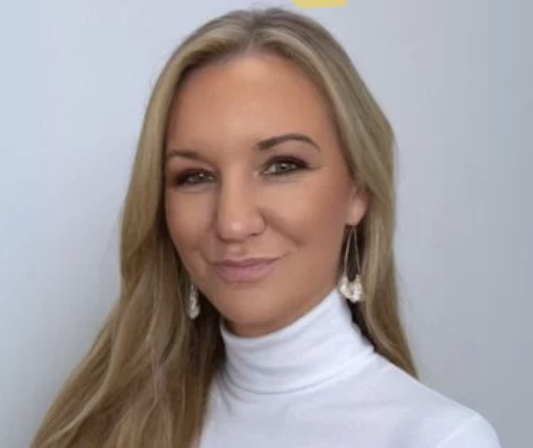
Courtney Jones, RN — Owner and Founder of IV League Hydration

Episode · ~30 min

Courtney Jones, RN — Owner & Founder, IV League Hydration

Prefer to listen later? Download the MP3.

What Courtney talks about

17 years at Boston Children's

Why an IV team and PICC nurse with 17 years of pediatric experience decided the skill she loved most could become a business.

100 IV bags in Nantucket

The Figawi weekend guerrilla launch — wristbands handed out at the ferry, sold-out bags, and the first real proof it could work.

Going all in on A Street

Leaving the hospital with no brick and mortar yet, an 800-square-foot first clinic, and the brutal first year where some days nobody walked in.

Safety and who shouldn't drip

Medical directors, real-time order sign-off, intake screening, and the cardiac and kidney contraindications every client is checked for.

Contrast therapy and cryo

Cold plunge, sauna, and the three-minute cryotherapy chamber Courtney calls the best cup of coffee without the jitters.

Advice for nurses

Be all in, expect the bad months, and know that the nurses who make it are usually the ones without a plan B.

Read more about the founder on Courtney's profile or see how the clinic started.

Full episode transcript

The complete, searchable transcript of the episode. Search any term, or jump straight to a chapter — the player will skip to that moment.

Welcome to Club Nurse — meet Courtney Jones, RN

Colton Lord: Welcome to Club Nurse. I'm Colton Lord, your host. By you being here today, it shows me that you are someone who wants to learn, grow, laugh, connect, and just let your emotions flow. We are here to share real stories and hear real-life experiences from real people. You are not alone in this, and Club Nurse is here to show you that.

Colton: I have with me today Courtney. Courtney is the owner of IV League, an IV hydration business where people come in for a variety of reasons — hangovers, before travel, weddings, fatigue, and many more. Courtney spent 17-plus years as a nurse at Boston Children's Hospital, where she mastered the skill of IV insertion and leadership as a charge nurse. With a mission to enhance community wellness, Courtney offers services that support health, beauty, and vitality through IV drips, contrast therapy, booster shots, and aesthetic treatments. Welcome, Courtney.

Courtney Jones: Thank you, Colton, for having me.

What is IV therapy, exactly?

Courtney: IV therapy is in your vein — we actually do an intravenous drip for you, and we're all registered nurses. You come in and we have a one-liter bag of lactated Ringer's, which is your electrolytes. It's inserted using sterile technique, we hook you up, and it's a great little experience. You can watch TV, enjoy the music, relax, and be on your phone while you get hydrated.

Courtney: The one-liter bag is equivalent to drinking a little over two gallons of water, but it's on a cellular level, so you're instantly getting 100% of the benefits. We start with the liter bag, but there are so many different things we can put in it — vitamins, anywhere from B-complex to glutathione, which is your master antioxidant.

Courtney: There are all walks of life that come into IV League for all different reasons. It's not just hangovers — that's what people always think — but it does help.

Courtney: I was an IV nurse at Children's Hospital for 17 years. I always loved being an IV nurse — there's something very satisfying about it, and I happened to be pretty good at it. I was on the PICC team for a while, so I placed those long lines. I had a knack for the IV world.

The origin story: Botox classes, Vegas, and the first aha moment

Colton: What inspired you to get into this? You got in before the big wave of these companies.

Courtney: First off, just being really good at IVs at Children's and seeing the benefits. I was in the ER for a while and saw what an IV could do to turn somebody around. I always had the entrepreneurial spirit, and while I was working at Children's it was on the back burner.

Courtney: I wanted to take some Botox classes — I always loved the beauty industry, and mixing beauty with nursing was the best of both. I was working nights at Children's and doing Botox classes during the day at Dr. Russo's, Medical Aesthetic Associates. One thing led to another, and I started doing Botox concierge for friends and family.

Courtney: About ten years prior I'd gone to Vegas, had just flown in, and felt like I was getting the stomach bug. I went online and found the first IV service that was ever in Vegas — Hangover Heaven. They picked me right up from my hotel, brought me to the clinic down the street, and it turned my trip around. That stayed in the back of my mind.

100 IV bags in Nantucket — the guerrilla launch

Courtney: I went to Dr. Russo and asked, can we introduce IV bags into the practice? He's been my medical director for seven years and he's wonderful and very supportive.

Courtney: I had an idea for an event in Nantucket for Figawi weekend. I bought 100 IV bags and brought them over. We did a lot of marketing beforehand — we made wristbands that said 'Hungover?' with the phone number on it and gave them to everybody coming off the ferry, so when they woke up in the morning they'd have it and could call for an IV.

Courtney: Figawi is a sailing regatta, and a lot of people from the city — especially South Boston — go over, rent houses, and it's a drinking fest for sure. By the end of the week everybody's dehydrated and hungover, so the IVs really were a hit. We pretty much sold out of the bags. That was one of the first aha moments: this could actually work.

A Street, Salem, and L Street — growing the clinics

Courtney: 36 A Street was our first location. It's only about 800 square feet, but we renovated it into a little treatment room too. I did Botox out of it, we had an Emsculpt machine, body contouring, fillers. It was my little baby for a while, but it became so successful I thought, we need to pop more of these up.

Courtney: L Street is our newest location — that's where we're sitting today, and it's been here two years now.

Colton: You've worked here a lot. Courtney: We miss you! Colton: I loved it. It's a nice little break away from bedside.

Going all in — leaving the hospital

Colton: Did you go all in? Did you quit your job, or keep per diem and phase out of the hospital?

Courtney: It happened pretty quickly. I started doing Botox on the side while working nights at Children's, and was doing so well that I decided to go all in — I didn't even have the brick and mortar at the time.

Courtney: I remember taking a filler class with Dr. Russo. He asked the class to raise your hand if you've quit your day job, and I was the only one. He said, 'Oh wow, we're all in.' But mostly the people that are all in are the people who are going to make it, because they don't have anything to fall back on. I knew I'd always have my nursing license — I could go back to the hospital — but this is really where I wanted my path to go.

What she misses about bedside nursing

Courtney: I miss the camaraderie with all the nurses. I loved working nights, and the trauma piece of it — I feel like I was really good at trauma and keeping my skills up that way. I loved being a Children's Hospital nurse. Seventeen years, all peds.

Colton: You still have to deal with all the parents. Courtney: That was the hardest part. Especially on the IV team — parents are hovering over you, making sure you're doing everything right.

Courtney: I love kids and I loved working with them. That was my passion at the time, for sure.

The biggest benefit of taking the leap

Colton: What's been the biggest benefit, or the most fulfilling part, of taking the leap into entrepreneurship? There's no roadmap, no guaranteed success.

Courtney: Being your own boss and making your own money is one of the most satisfying things you could ever do. You're not stuck to the hourly pay. I'm not working for the man — this is my own. I'm such a creative person that it feels endless for what I can do with this, and it's an ever-evolving field. There's something new every day.

Colton: And the flexibility — that freedom. Even though you probably put in more hours doing this than you did in the hospital, it's your own.

Medical directors, orders, and how a nurse opens a clinic

Colton: If a nurse out there is thinking about starting their own IV hydration business — do you have to be a nurse practitioner? What are the logistics?

Courtney: You have to be a nurse and have a medical director. Dr. Russo is the medical director for a lot of nurses in the area who have med spas. We use a medical records app where, in real time, nurse practitioners are signing off orders. It's been a beautiful way of being able to have your own store with those orders signed off in real time.

Colton: It probably varies state to state. In Arizona we had a medical director, standing orders, and I never spoke to a provider — it was my clinical judgment. Here you send it off and a nurse practitioner signs off, which honestly feels a little bit safer. A second set of eyes to say, hey, maybe not.

Safety, contraindications, and who shouldn't get an IV

Colton: For somebody who's never done IV therapy, are there contraindications — people who shouldn't do this or should consult their provider first?

Courtney: Anybody with heart issues, cardiac issues, or kidney issues — those are really the biggest things. We have everyone do a medical intake; it's a pretty short one. I've been doing this for seven years and literally the only thing that's ever happened here is somebody fainting from the IV. It's extremely, extremely safe.

Courtney: The amount of fluid you can have is based on your weight as well, so we take all of that into account. Even pregnant women — we can give a liter bag of fluid and a little B-complex, but that's about it, just to rehydrate.

Wild stories: fainters, Figawi, and a Scottsdale 911 call

Courtney: In Nantucket for Figawi weekend, there was a group of guys who'd been partying all night. I was doing their IVs on the couch and one of them just went out — and one of his friends reached for a cold beer in the fridge to put on his chest. There have been one or two incidents where we've called an ambulance, just for people who've had too much of a night. We take a blood pressure and make sure everyone's stable.

Courtney: With anything you do there's always a risk. The part I find funny — even in the hospital — is that the people most afraid of needles are often the big guys who don't want to say anything. I always say, if you're going to pass out, just tell me. If you're afraid of needles, that's okay. I'd rather know.

Colton: In Scottsdale I had two guys who'd been at a wedding on a week-long bender. The second guy didn't tell me he was afraid of needles, and he vagaled down, passed out, and started convulsing. You can convulse from a vasovagal episode — rare, but it happens. We called 911, and he ended up refusing to go to the ER because he was fine. His friend saw it and had a panic attack.

Courtney: It's pretty cool to see the transformation when people come in not feeling well — a stomach bug, dehydration, muscle cramps in the middle of the night. We give them the Myers cocktail with magnesium and it helps with those cramps.

Memberships and the best time to get a drip

Courtney: We have our membership program and it's been taking off, because people like to keep up with their hydration. It's for anybody from someone who wants to come in once a month to people who want to come in every week — depending on what works for you.

Colton: I love getting IVs before a vacation especially, because before a vacation you're not sleeping as much, you're exposed to all the airport germs, and most people indulge more alcohol when they're traveling.

Courtney: I'm actually going to do an IV today or tomorrow, because we're going to the beach for the week with our kids and it's going to be a hot week. Just want the energy and mental clarity and to stay away from illness. When you're out in the sun a lot, vitamin C and glutathione can really help with sun exposure — I find when I do it before a trip I don't peel and I don't burn as much.

Courtney: We have a lot of people come right from Logan, from all over the country. The A Street location is popular for that because it's about ten minutes from the airport.

Contrast therapy, cold plunge, sauna, and cryotherapy

Courtney: We call ourselves a performance spa, because everything we have in our stores helps performance in everyday life. We have the cold plunge and the sauna. A lot of people like contrast therapy — going from hot to cold, cold to hot. It's very popular, a lot of athletes like it. It's really good for stress, decreasing cortisol levels, detoxing your body, and mental clarity.

Courtney: You have the room for the hour. A lot of people like to go back and forth — 20 minutes in the sauna, then the cold plunge for three minutes.

Colton: I could stay in the sauna for a while, but that cold plunge — no matter how much I mentally prepare, it's just as miserable. After, it really does feel amazing.

Courtney: My favorite thing is the cryotherapy. It's vortex air — you're in a chamber, your head's out, you wear a swimsuit or shorts and a sports bra, and we give you mittens and booties. It's three minutes of the coldest you'll ever be in your life. The science behind it is your body feels like it's going into hypothermia, but it's not. All your blood goes to your vital organs to protect them and becomes nutrient-rich and oxygen-rich — almost like it's being filtered. When it goes back to your extremities, it's like new.

Courtney: It feels like the best cup of coffee without the jitters. You're sharp, dopamine levels are through the roof, and you feel really good afterward. A lot of people with back pain love it — including my husband, who has three herniated discs. It's been life-changing for him. Better sleep too.

Advice for nurses: the hard first year and going all in

Colton: We don't learn how to run a business in nursing school. How did you learn all of that — trial and error, or classes?

Courtney: A lot of trial and error. Good months, bad months, 'what did I get myself into.' Honestly, the first year over at A Street was hard. I actually contemplated whether I'd made the right decision, because there would be days — and I was there seven days a week — where not one person would come in. It takes a lot to get up and running.

Courtney: I tell people who want to start a business: you really need to be all in, you need to have all of the passion for what you're doing, and you've got to know that you will succeed — because you can really get down on yourself.

Courtney: At A Street it was a lot of guerrilla marketing — going out in the street, just educating. We were the first dedicated IV lounge in Boston, and it was so weird for people. 'Oh my gosh, you can do an IV not in a clinic setting?'

Colton: It reminds me of how an artist makes it. Most of them never had a plan B. Forcing yourself into that mindset of 'this is my only option' makes you figure out how to pivot when nobody's coming in for a couple of days.

Marketing lessons, social media, and a competitive market

Courtney: There have been lots of failures along the way that taught me so many different things. Marketing has always been a big challenge — where to put your money. You can spend a lot and not get anything out of it, and I've learned a lot from those lessons.

Courtney: Social media through the years has been wonderful for us — Instagram, TikTok, all of it. You can track who's seeing it, and a lot of it is word of mouth. People tagging you in things is more helpful than people realize.

Colton: I imagine it's a more competitive market now. Courtney: The competition is real now. Everybody's caught on.

Colton: You were working as a nurse in a hospital with no business experience, and now without going and getting a master's degree you can teach somebody how to start a business. That's a whole different set of skills, and I don't think people understand the value in that. I think it's highly valuable.

Colton: From the bottom of my heart, thank you for being here at Club Nurse. If you gained something valuable from today's episode, share it with someone you love. Follow Nurse.org to stay informed with all of the hottest healthcare topics. Until next time, take care of yourself the way you take care of everyone else.

Transcript auto-generated from the episode audio and lightly formatted for readability. Minor wording may differ from the recording.

Nurse.org logo

Featured on the Nurse.org podcast.

Questions

Who is the founder of IV League Hydration?

Courtney Jones, RN — a Massachusetts-licensed registered nurse who spent 17 years at Boston Children's Hospital on the IV and PICC teams before founding IV League Hydration in 2018 as Boston's original nurse-owned IV therapy clinic.

What is this podcast episode about?

It's a Club Nurse (Nurse.org) conversation with host Colton Lord about how Courtney went from pediatric bedside nursing to owning two South Boston IV lounges — including the Nantucket Figawi launch, the hard first year on A Street, IV safety and contraindications, memberships, and contrast and cryotherapy.

How long is the episode?

About 30 minutes. You can stream it right on this page, read the full searchable transcript, or download the audio file.

Where can I book with IV League Hydration?

Book online in under a minute, or visit either South Boston clinic on A Street or L Street. Mobile and concierge appointments are available across Greater Boston.

Come see the clinic Courtney built

Two South Boston locations, nurse-delivered drips, and mobile visits across Greater Boston.

Book a drip